/* 1. Elementor ka default vertical expansion band karo */
left: 100% !important; /* Bahar phenk do */
/* 2. Jab click ho to slide karwao */
/* 3. Main menu container ko block karo taake sub-menu ke beech gap na aaye */
/* 4. Back button styling */
// 1. Har sub-menu mein Back button dalna
// 2. Click Logic: Default behaviour kill karke slide on karna
e.stopImmediatePropagation(); // Elementor ki default script ko rokne ke liye
// 3. Back button logic
Menu
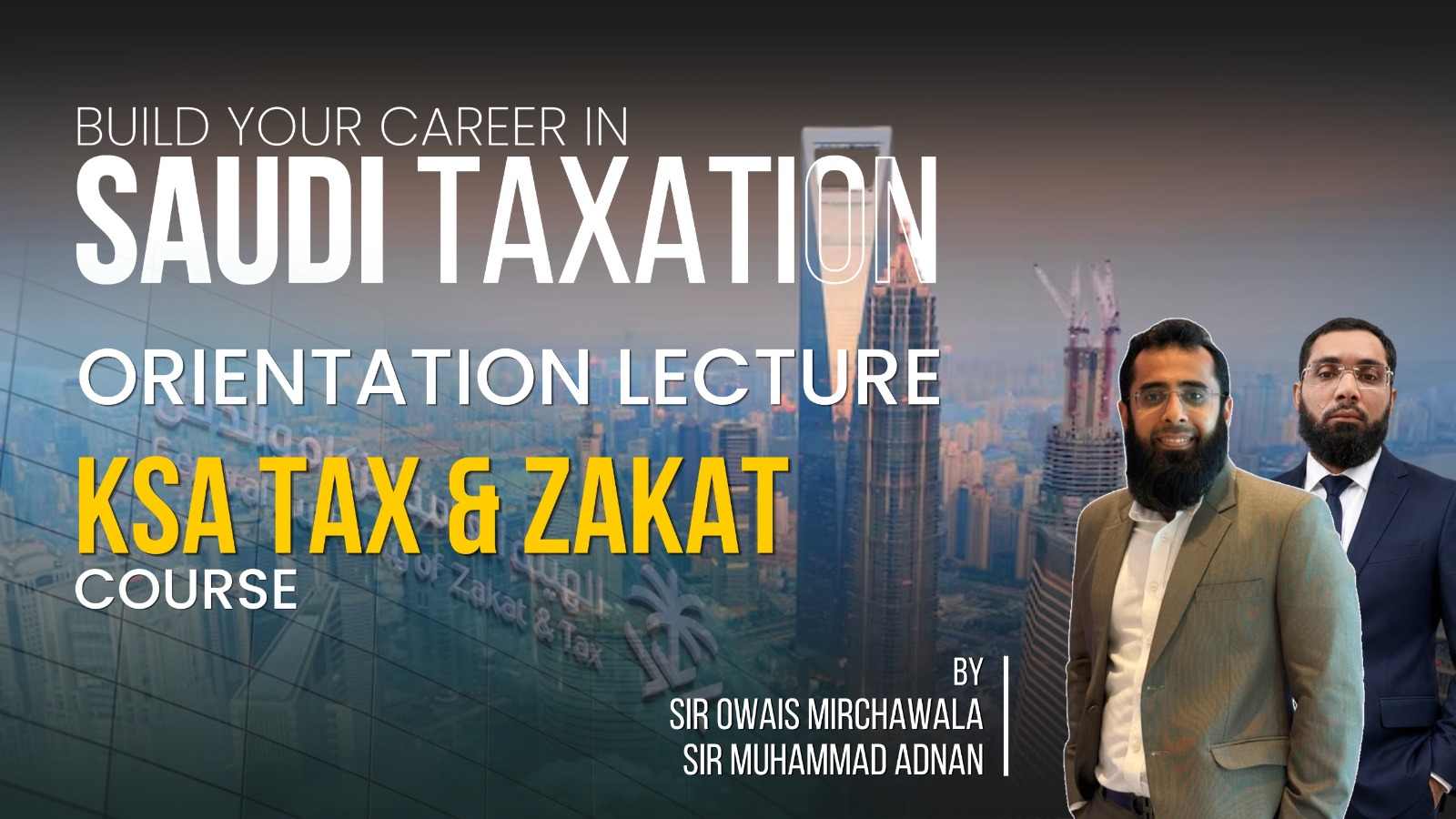
KSA TAXATION & ZAKAT
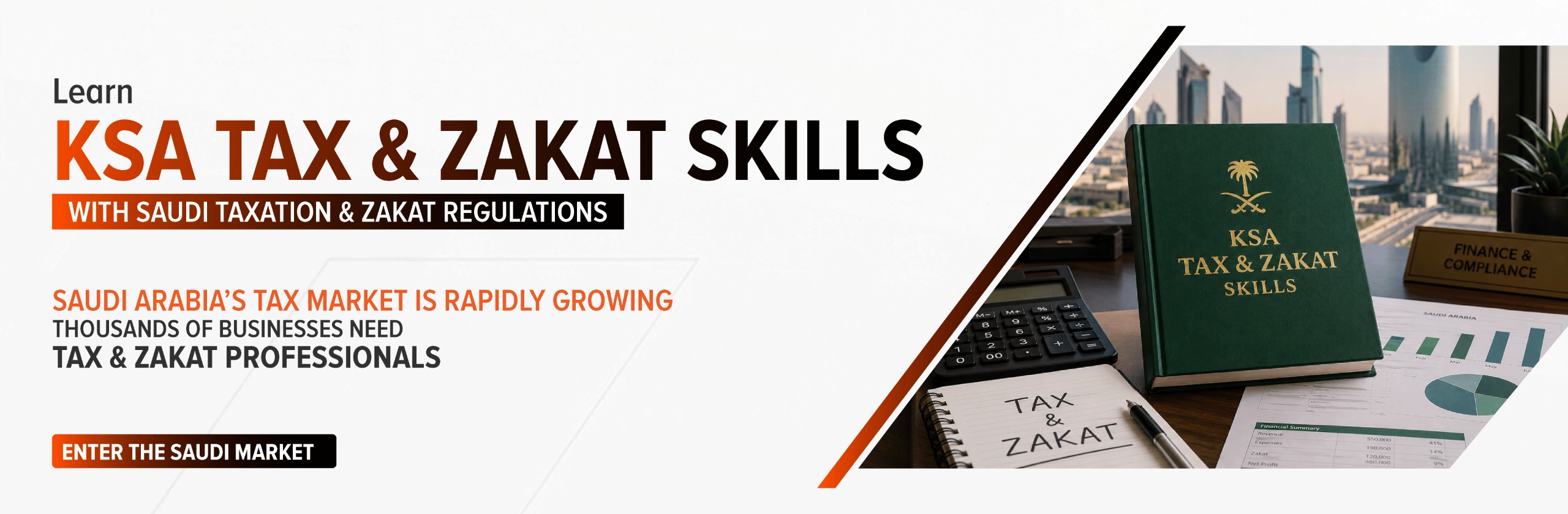
As Saudi Arabia’s financial landscape continues to evolve, mastering local tax regulations and amendments is crucial to operating in the Kingdom. Compliance is not just a legal need but also an ethical responsibility.
Mirchawala’s uniquely designed training course, Complete Tax System in Saudi Arabia: VAT, Corporate Income Tax (CIT), and Zakat, equips participants with a comprehensive understanding of the principles, laws, and practices of Value Added Tax (VAT), Zakat compliance and calculation, ZATCA portal filing procedures, Corporate Income Tax, and Audit readiness. Participants learn how to calculate taxable income, meet registration and filing requirements, manage objectives, and implement compliance strategies.
This Saudi Arabia taxation course builds confidence to manage tax obligations professionally. With demand for skilled tax professionals rising across Saudi Arabia, this certification offers exponential opportunities for career mobility and growth.
Ensure a Thriving Career in KSA Taxation & Zakat
Earn High: In Saudi Arabia, thousands of businesses are required to comply with VAT, Corporate Income Tax, and Zakat regulations under ZATCA. By mastering KSA taxation, you can build a high-income career in one of the fastest-growing Gulf markets.
Start Freelancing: With Saudi Arabia’s digital tax transformation and strict compliance requirements such as E-Invoicing (FATOORA), businesses actively seek tax professionals and consultants. Develop practical expertise and start offering freelance taxation services to KSA-based clients.
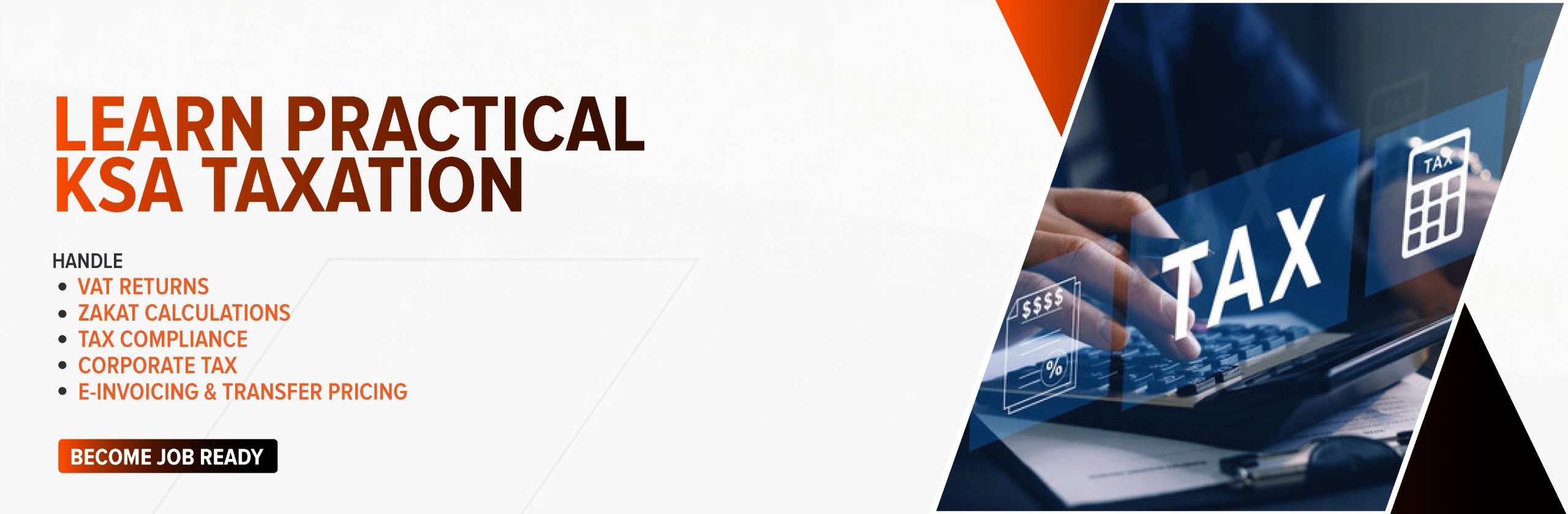
Become an Expert: The comprehensive guidance by Sir Adnan equips you with practical knowledge of VAT, Zakat, Withholding Tax, Corporate Tax, and E-Invoicing, helping you become job-ready for the Saudi market.
Career-Oriented Learning: The course is designed according to current KSA market requirements and ZATCA regulations, combining theoretical concepts with real-world case studies and practical applications.
Pre-recorded Lecture: The pre-recorded lectures allow students to learn anytime, anywhere, making it easier for working professionals and students to complete the course at their own pace.
Saudi Market Demand: As Saudi Arabia continues its Vision 2030 transformation, the demand for skilled tax and finance professionals is rapidly increasing across consulting firms, multinational companies, and local businesses.
KSA
Taxation
Ensure a Thriving Career in KSA Taxation & Zakat
Earn High:
In Saudi Arabia, thousands of businesses are required to comply with VAT, Corporate Income Tax, and Zakat regulations under ZATCA. By mastering KSA taxation, you can build a high-income career in one of the fastest-growing Gulf markets.
Start Freelancing:
With Saudi Arabia’s digital tax transformation and strict compliance requirements such as E-Invoicing (FATOORA), businesses actively seek tax professionals and consultants. Develop practical expertise and start offering freelance taxation services to KSA-based clients.
Become an Expert:
The comprehensive guidance by Sir Adnan equips you with practical knowledge of VAT, Zakat, Withholding Tax, Corporate Tax, and E-Invoicing, helping you become job-ready for the Saudi market.
Career-Oriented Learning:
The course is designed according to current KSA market requirements and ZATCA regulations, combining theoretical concepts with real-world case studies and practical applications.
Pre-recorded Lecture:
The pre-recorded lectures allow students to learn anytime, anywhere, making it easier for working professionals and students to complete the course at their own pace.
Saudi Market Demand:
As Saudi Arabia continues its Vision 2030 transformation, the demand for skilled tax and finance professionals is rapidly increasing across consulting firms, multinational companies, and local businesses.
Career Paths and Jobs for CFA® Charterholders
As a CFA Charterholder, you will be considered as the apex for professional development in the global finance industry. Opportunities for growth exist in a wide range of finance sectors including:
Investment Management
Wealth Management
Financial Analysis
Corporate Finance
Risk Management
Private Equity and Venture Capital
Investment Management
Hedge Funds and Alternative Investments
Consulting
Career Paths and Jobs for KSA Taxation
Here’s a list of common job roles after taxation training in Saudi Arabia:
VAT Consultant
Tax Executive
Accountant
Finance Analyst
Compliance Officer
Auditor
So, why choose
Muhammad Adnan
for KSA Tax journey?
Muhammad Adnan is a highly sought-after tax trainer and consultant with deep expertise in Saudi Arabia’s full tax landscape. With a practical, student-first teaching philosophy, he simplifies complex ZATCA regulations — VAT, Corporate Income Tax, and Zakat — into clear, applicable knowledge. Having trained finance professionals across the Kingdom, his classroom style blends real-world case studies with structured frameworks, ensuring every student leaves equipped to handle real compliance scenarios with confidence.
Why Sir
Owais?
Qualification & Achievements
Qualified ACCA & ICAEW
15 years of experience
35 Nationwide Positions by student in all offered exams
14 positions
by his AAA Students
Corporate Experience
of Big 4 & MNC
Selected multiple times for ACCA’s officials webinars
An excellent KSA tax teacher, a perfect approach, and a flexible platform! Enrolling in the KSA taxation & Zakat course at Mirchawala was the best career decision I’ve made. They perfectly understands students' requirements and trains them accordingly with his immense knowledge and effective teaching methods.
Tahir Basit
I was actively looking for a KSA taxation & Zakat course in India. Although I was not sure about the efficiency of online training, Sir adnan comprehensive guidance and unique teaching approach have cleared all my doubts and ensured a successful career in global business. I feel proud, I took the right decisions.
Priyanka Talreja
I was recently admitted to the KSA Taxation & Zakat Course at Mirchawala. It was a fantastic learning experience. The tutor, Sir Adnan, is truly the best KSA tax trainer, with an exceptional teaching approach that made complex concepts easy to understand.. The materials and guidance he gave us were helpful in understanding the complete curriculum. The course content was well covered, and he explained the concepts very well.
Alisha Faiq
Mirchawala is the best training institute I got for the KSA taxation & Zakat course. A special thanks goes to Sir Adnan for assisting me in completing my course. He is a great KSA tax trainer; he guides the best for the training and also helps in real-time doubt's solving sessions. I will recommend this course on KSA taxation & Zakat to all.
Husnain Owais
I want to extend my gratitude for the experience and knowledge I gained through this KSA taxation & Zakat program. expertise and teaching style made the learning process interesting. The KSA Taxation & Zakat Course is well-structured and provides a comprehensive understanding of the subject. I feel more confident that this knowledge will benefit me in my career growth.
Ahmed Subhan
Demo Lectures
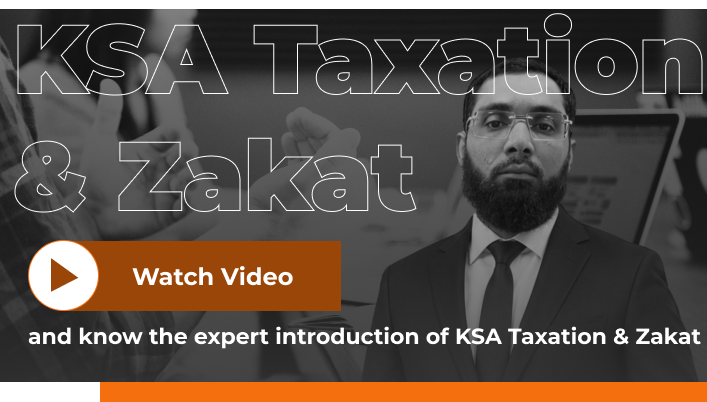
Mirchawala presents a demo class for the KSA Taxation & Zakat Course. This demo class aims to:
Demonstrate how the course looks to people interested in KSA tax and Zakat Filings. Provide real-time examples of what it’s like to study at Mirchawala. Help those unsure if this course is a good fit to get a clear idea of the course structure.
In this course, our expert tutor, Sir Adnan, will discuss:
A basic introduction to KSA taxation and its key topics. Fundamentals of Zakat and how it works. Concepts related to filing a tax return. Some Examples related to KSA Companies. Whole outline of the course offered.
Mirchawala presents a demo class for the KSA Taxation & Zakat Course. This demo class aims to:
Demonstrate how the course looks to people interested in KSA tax and Zakat Filings. Provide real-time examples of what it’s like to study at Mirchawala. Help those ensure if this course is a good fit to get a clear idea of the course structure.
In this course, our expert tutor, Sir Adnan, will discuss:
A basic introduction to KSA taxation and its key topics. Fundamentals of Zakat and how it works. Concepts related to filing a tax return. Some Examples related to KSA Companies. Whole outline of the course offered.
Stay ahead in the Exams with Mirchawala's specialized LMS.
MHA-LMS
Our specialised LMS provides students with the course in a well‑structured manner, which ensures effective and efficient study. The customised testing system in our LMS helps students experience real exam conditions while attempting homework and mock exams.
To discover further key features of our LMS, including Access to recorded lectures library, specialized testing system, access to course attachments and comprehensive progress reports, watch our tutorial video.
Stay ahead in the world of finance with Mirchawala's innovative LMS.
MHA-LMS
Welcome to Mirchawala’s cutting-edge Learning Management System (LMS), the heartbeat of your accountancy journey! Our LMS is a dynamic platform tailored for seamless learning, offering real-time progress tracking, interactive modules, and collaborative study tools.
To discover the key features of our LMS, including personalized study plans, live webinars, resource libraries, discussion forums, and comprehensive progress reports!”
This tax training course provides practical and technical knowledge of Saudi Arabia’s tax framework, and it is structured into 3 sections:
SECTION 1: VALUE ADDED TAX (VAT)
Duration: 10 Hours | 13 Modules
Module 1: Introduction to VAT in Saudi Arabia
VAT concept and mechanism
History of VAT in KSA
VAT rate evolution (5% to 15%)
Role of ZATCA
Module 2: VAT Registration Requirements
Mandatory threshold: SAR 375,000
Voluntary threshold: SAR 187,500
Registration process
Group and non-resident registration
Module 3: Taxable Supplies and VAT Rates
Standard-rated supplies (15%)
Zero-rated supplies
Exempt supplies
Out-of-scope transactions
Module 4: VAT Calculation and Invoicing
Input VAT vs Output VAT
Tax invoices and simplified invoices
E-invoicing requirements
Credit/debit notes
Module 5: Input VAT Recovery and Restrictions
Recoverable VAT
Blocked input VAT
Partial exemption
Documentation requirements
Module 6: VAT on Special Transactions
Real estate
Financial services
International services
Digital supplies
Module 7: VAT Return Filing and Payment
VAT return filing
ZATCA portal walkthrough
Payment deadlines
Refund procedures
Module 8: VAT Compliance and Record Keeping
6-year record retention
VAT reconciliations
Internal controls
Compliance errors
Module 9: VAT Audits and Assessments
Audit triggers
Audit process
Voluntary disclosures
Appeals process
Module 10: VAT on Imports and Customs
Import VAT
Customs valuation
Deferred VAT
Re-export rules
Module 11: VAT by Industry
Manufacturing
Retail
Construction
Hospitality
Healthcare
Module 12: VAT Case Studies
Input VAT disputes
E-invoicing penalties
Export issues
Real estate VAT errors
Module 13: VAT Best Practices
Compliance checklist
Technology tools
Common errors
Future updates
SECTION 2: CORPORATE INCOME TAX (CIT)
Duration: 7 Hours | 9 Modules
Module 14: Introduction to Corporate Income Tax
CIT framework
Taxable persons
Tax residency
Permanent establishment
Module 15: Taxable Income Calculation
Taxable profit adjustments
Deductible expenses
Non-deductible expenses
Loss carryforward
Module 16: Special Income Types
Dividends
Capital gains
Royalties
Foreign income
Module 17: Withholding Tax (WHT)
WHT rates
Non-resident payments
Treaty relief
Filing process
Module 18: Transfer Pricing
Arm’s length principle
Related parties
Documentation
Penalties
Module 19: CIT Filing and Compliance
Return deadlines
Form filing
ZATCA portal demo
Amendments
Module 20: Mixed Ownership Companies
CIT and Zakat allocation
Compliance issues
Documentation
Module 21: CIT Audits and Disputes
Audit process
Common adjustments
Appeals and litigation
Module 22: CIT Case Studies and Best Practices
PE disputes
TP adjustments
WHT penalties
Treaty claims
SECTION 3: ZAKAT
Duration: 7 Hours | 10 Modules
Module 23: Introduction to Zakat in Saudi Arabia
Zakat principles
Legal framework
Zakat rate 2.5%
ZATCA administration
Module 24: Components of Zakat Base
Cash and receivables
Inventory
Fixed assets
Deductible liabilities
Module 25: Zakat Calculation Methods
Net invested funds
Net assets approach
Method comparison
Module 26: Nisab and Hawl Requirements
Nisab calculation
Hawl rules
Practical corporate application
Module 27: Mixed Ownership Companies
Ownership allocation
Dual filing
Calculation examples
Module 28: Zakat Registration and Filing
Registration process
Form submission
Portal demo
Certificate issuance
Module 29: Compliance and Deadlines
Filing deadlines
Penalties
Amendments
Voluntary disclosure
Module 30: Zakat by Industry
Trading
Manufacturing
Real estate
Services
Module 31: Zakat Case Studies
Receivables disputes
Inventory issues
PE risks
Allocation errors
Module 32: ZATCA Audits and Best Practices
Audit stages
Documentation
Objections
Final review and Q&A
Course Outline
This tax training course provides practical and technical knowledge of Saudi Arabia’s tax framework, and it is structured into 3 sections:
Concept of UAE Corporate Taxes: Introduction to corporate tax rules and taxable persons. Corporate Tax Rates and Calculation: Detailed explanation of corporate tax rates and their calculation. Taxable Income Calculation: Methods for calculating taxable income for corporate taxes. Unrealized Gains and Losses: Rules relating to the treatment of unrealized gains and losses. Exempt Income: Discussion on exempt income and its implications. Tax Reliefs and Deductions: Available reliefs and deductions for corporate taxes. Loss Reliefs: How to apply and benefit from loss reliefs under UAE tax law. Related Party Transactions: Understanding issues related to related party transactions. Taxable and Exempt Persons: Rules governing taxable persons and exempt persons. Freezone Persons: Qualifying conditions and tax implications for Freezone persons. Sign-Up Process: How to sign up on the Federal Tax Authority (FTA) portal. Registration Process for Corporate Taxes: Step-by-step corporate tax registration on the FTA portal. Amendment of Taxable Person Details: Process for updating details of taxable persons on the FTA portal. Annual Corporate Tax Returns: Filing of annual corporate tax returns.
Administrative Issues: Addressing administrative matters of corporate taxes. Concept of Value Added Tax (VAT): Overview of VAT, including types of supplies and scope. VAT Registration and Deregistration: Registration and deregistration matters for VAT. Definition of Goods and Services: Classification of goods and services from a VAT perspective. VAT Returns: Preparation and filing of VAT returns. VAT Registration Process: Step-by-step VAT registration on the FTA portal. VAT Filing Process: Filing VAT returns on the FTA portal. VAT Administrative Processes: Managing VAT-related administrative tasks. Types of Companies in UAE: Overview of different company types, including Mainland and Freezone. Mainland Company Formation: Process for forming a Mainland company in the UAE. Freezone Company Formation: Process for forming a Freezone company in the UAE. Yearly Secretarial Requirements: Annual compliance and secretarial obligations. Gaining Clients in UAE: Strategies for acquiring clients in the UAE. Sessions with Employers: Insights and networking opportunities with potential employers.
SECTION 1: VALUE ADDED TAX (VAT)
Duration: 10 Hours | 13 Modules
Module 1: Introduction to VAT in Saudi Arabia
VAT concept and mechanism
History of VAT in KSA
VAT rate evolution (5% to 15%)
Role of ZATCA
Module 2: VAT Registration Requirements
Mandatory threshold: SAR 375,000
Voluntary threshold: SAR 187,500
Registration process
Group and non-resident registration
Module 3: Taxable Supplies and VAT Rates
Standard-rated supplies (15%)
Zero-rated supplies
Exempt supplies
Out-of-scope transactions
Module 4: VAT Calculation and Invoicing
Input VAT vs Output VAT
Tax invoices and simplified invoices
E-invoicing requirements
Credit/debit notes
Module 5: Input VAT Recovery and Restrictions
Recoverable VAT
Blocked input VAT
Partial exemption
Documentation requirements
Module 6: VAT on Special Transactions
Real estate
Financial services
International services
Digital supplies
Module 7: VAT Return Filing and Payment
VAT return filing
ZATCA portal walkthrough
Payment deadlines
Refund procedures
Module 8: VAT Compliance and Record Keeping
6-year record retention
VAT reconciliations
Internal controls
Compliance errors
Module 9: VAT Audits and Assessments
Audit triggers
Audit process
Voluntary disclosures
Appeals process
Module 10: VAT on Imports and Customs
Import VAT
Customs valuation
Deferred VAT
Re-export rules
Module 11: VAT by Industry
Manufacturing
Retail
Construction
Hospitality
Healthcare
Module 12: VAT Case Studies
Input VAT disputes
E-invoicing penalties
Export issues
Real estate VAT errors
Module 13: VAT Best Practices
Compliance checklist
Technology tools
Common errors
Future updates
SECTION 2: CORPORATE INCOME TAX (CIT)
Duration: 7 Hours | 9 Modules
Module 14: Introduction to Corporate Income Tax
CIT framework
Taxable persons
Tax residency
Permanent establishment
Module 15: Taxable Income Calculation
Taxable profit adjustments
Deductible expenses
Non-deductible expenses
Loss carryforward
Module 16: Special Income Types
Dividends
Capital gains
Royalties
Foreign income
Module 17: Withholding Tax (WHT)
WHT rates
Non-resident payments
Treaty relief
Filing process
Module 18: Transfer Pricing
Arm’s length principle
Related parties
Documentation
Penalties
Module 19: CIT Filing and Compliance
Return deadlines
Form filing
ZATCA portal demo
Amendments
Module 20: Mixed Ownership Companies
CIT and Zakat allocation
Compliance issues
Documentation
Module 21: CIT Audits and Disputes
Audit process
Common adjustments
Appeals and litigation
Module 22: CIT Case Studies and Best Practices
PE disputes
TP adjustments
WHT penalties
Treaty claims
SECTION 3: ZAKAT
Duration: 7 Hours | 10 Modules
Module 23: Introduction to Zakat in Saudi Arabia
Zakat principles
Legal framework
Zakat rate 2.5%
ZATCA administration
Module 24: Components of Zakat Base
Cash and receivables
Inventory
Fixed assets
Deductible liabilities
Module 25: Zakat Calculation Methods
Net invested funds
Net assets approach
Method comparison
Module 26: Nisab and Hawl Requirements
Nisab calculation
Hawl rules
Practical corporate application
Module 27: Mixed Ownership Companies
Ownership allocation
Dual filing
Calculation examples
Module 28: Zakat Registration and Filing
Registration process
Form submission
Portal demo
Certificate issuance
Module 29: Compliance and Deadlines
Filing deadlines
Penalties
Amendments
Voluntary disclosure
Module 30: Zakat by Industry
Trading
Manufacturing
Real estate
Services
Module 31: Zakat Case Studies
Receivables disputes
Inventory issues
PE risks
Allocation errors
Module 32: ZATCA Audits and Best Practices
Audit stages
Documentation
Objections
Final review and Q&A
Course Outline
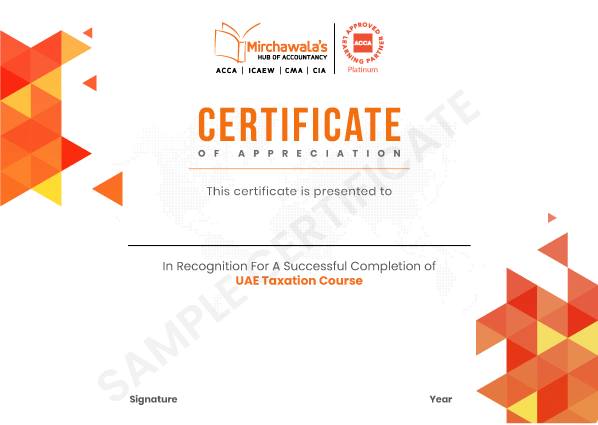
Earn a Certification from
Mirchawala's Hub of Accountancy
Upon successful completion of our KSA Tax Course, you will receive an official certification from Mirchawala’s Hub of Accountancy, enhancing your credentials and demonstrating your expertise in KSA taxation.
Earn a Certification from
Mirchawala's Hub of Accountancy
Upon successful completion of our UAE Tax Course, you will receive an official certification from Mirchawala’s Hub of Accountancy, enhancing your credentials and demonstrating your expertise in UAE taxation.
Frequently Asked Questions
Is there a tax system for individuals in Saudi Arabia?
There is no individual income tax policy here, and income tax is not imposed on an individual’s earnings if they are earned in Saudi Arabia. Non-employment income is taxed as an entity or permanent establishment (PE).
What is the taxation course in Saudi Arabia?
The Complete Tax System in Saudi Arabia by Mirchawala provides in-depth knowledge of CIT, VAT principles, filing, compliance, and more. This training course is designed to take you through the topics from basic to advanced levels and make you job-ready.
How does Mirchawala’s tax training stand out?
The institute offers live and recorded classes, hands-on training, and assistance throughout the learning journey. Most importantly, the tutors train you and boost your confidence in handling taxation.
How much can I earn after the Saudi Arabia taxation course?
On average, a Tax Accountant’s salary in Saudi Arabia varies from SAR 3,500 to SAR 15,800.
What are the eligibility criteria for this tax course?
The prerequisites for this course include a basic qualification and a degree in taxation. While having some experience in the same domain is preferred.
Frequently Asked Questions
Is there a tax system for individuals in Saudi Arabia?
There is no individual income tax policy here, and income tax is not imposed on an individual’s earnings if they are earned in Saudi Arabia. Non-employment income is taxed as an entity or permanent establishment (PE).
What is the taxation course in Saudi Arabia?
The Complete Tax System in Saudi Arabia by Mirchawala provides in-depth knowledge of CIT, VAT principles, filing, compliance, and more. This training course is designed to take you through the topics from basic to advanced levels and make you job-ready.
How does Mirchawala’s tax training stand out?
The institute offers live and recorded classes, hands-on training, and assistance throughout the learning journey. Most importantly, the tutors train you and boost your confidence in handling taxation.
How much can I earn after the Saudi Arabia taxation course?
On average, a Tax Accountant’s salary in Saudi Arabia varies from SAR 3,500 to SAR 15,800.
What are the eligibility criteria for this tax course?
The prerequisites for this course include a basic qualification and a degree in taxation. While having some experience in the same domain is preferred.
Please select the Language in which you want to take the Lectures ?