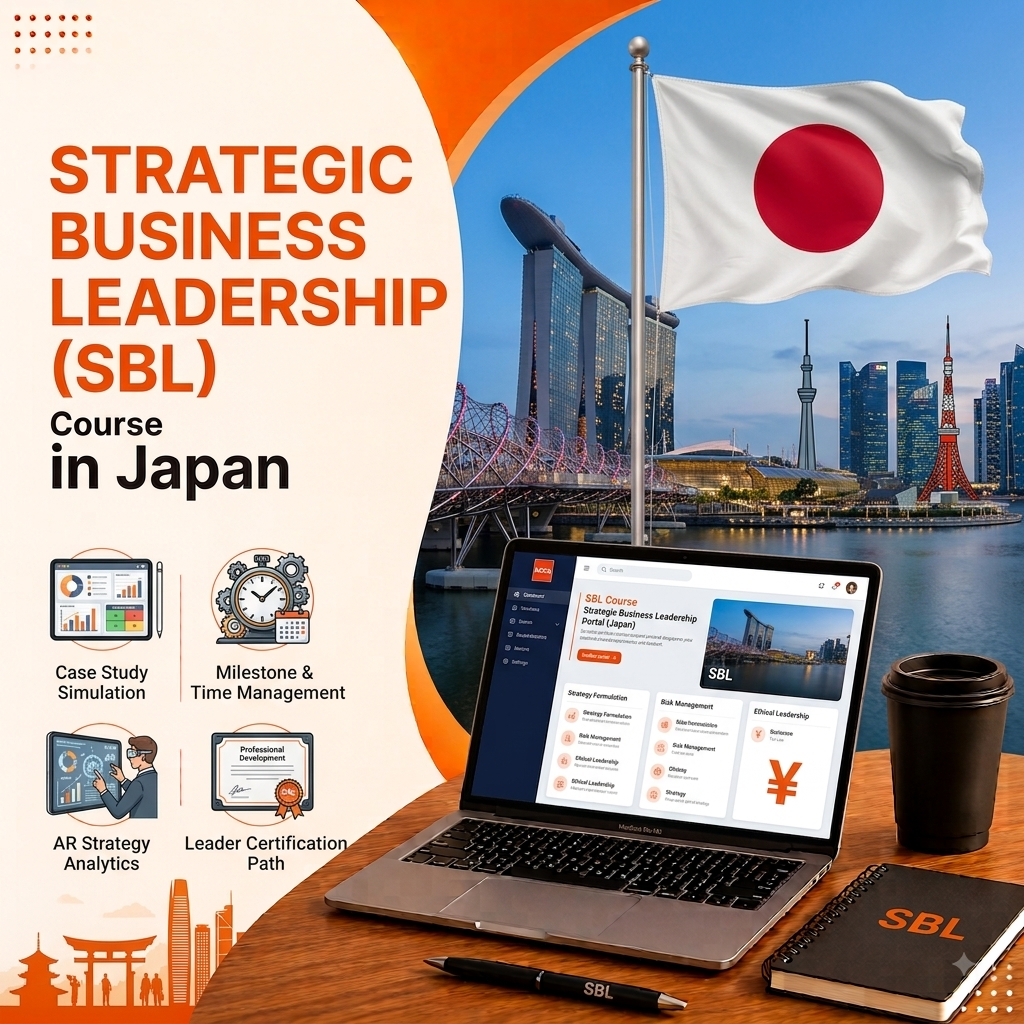
Strategic Business Leadership (SBL) is one of the two required papers at the ACCA Strategic Professional level, testing strategy, technology, risk, governance, and ethics through a single integrated case study. It is a simulation of an actual business setting rather than merely a test of textbook knowledge. To succeed in the SBL ACCA paper, you must think, evaluate, and make decisions like a real senior executive.
Many aspirants feel overburdened by the exam and its challenging case studies. If this is causing you anxiety, you are not alone. Passing SBL in Japan depends more on the right approach and careful preparation than on skill alone.
This article is focused on clearing up any confusion you have around the SBL, including its exam structure, allotted time period, and the set of strategies to qualify for Strategic Business Leadership in Japan.
SBL Exam Format
The essential elements of the SBL exam format are mentioned below:
Exam Component |
What to Expect |
| Duration | 3 hours 15 minutes |
| Assessment Method | Computer-Based Exam (CBE) |
| Case Structure | One integrated business case study |
| Question Style | Multiple tasks based on the same case scenario |
| Information Provided | Financial data, reports, emails, transcripts, and other case exhibits |
| Response Format | Report, memo, briefing paper, letter, etc., depending on the task |
| Technical Marks | 80% |
| Professional Skills Marks | 20% |
Take the first step toward ACCA, enrol with expert guidance today
 Enrol in ACCA Today
How to Write Answers in SBL Paper
In the Strategic Business Leadership exam, technique is not just soft skills but a mark-earning tactic. Here’s how to format your answer so that you consistently get both technical and professional marks:
20 Professional Skills Marks: SBL is the strategic professional paper that specifically includes professional skills marks. They are given out in five distinct categories and sit alongside the 80 technical marks.
Communication: Using the correct document type (report, memo, briefing note, email, or board paper), an audience-appropriate tone, a clear structure with headings, and complete sentences rather than jumbled bullet points.
Commercial Acumen: Demonstrating knowledge of the industry backdrop, the broader business climate, and the organization’s practical ramifications.
Analysis: Using evidence from the exhibits to dissect issues and draw logical conclusions from the information provided.
Skepticism: Questioning assumptions, finding bias or incomplete facts, and challenging the viewpoints presented in the scenario.
Evaluation: Weighing the advantages and disadvantages, choosing a course of action with a well-founded recommendation, and coming to a well-founded recommendation.
The Technical Requirements PREP Structure
Use PREP (Point, Reason, Evidence, Proposal) for analytical requirements.
Point: Clearly state your conclusion or finding in the opening sentence. Reason: Explain the reasoning, drawing on the syllabus. Evidence: Make reference to particular facts or data from the case study exhibits. Proposal: Make recommendations about what ought to be done or the implications for the organization.
This format ensures that each point you make is based on the scenario and connected to a recommendation, which is precisely what you learn through the ACCA SBL course and examiners look for.
Methods to Pass ACCA SBL at the First Attempt
Create a pre-seen analysis document. Use Porter’s Five Forces, PESTEL, and the resource-based view to discuss the organization’s strategic position. Identify financial indicators, ethical concerns, and governance threats. As exam day draws near and you complete the SBL syllabus, review and revise this document.
Study the professional marking criteria. Before writing a single practice response, download and review the SBL professional skills marking guide from the ACCA website. You can purposefully incorporate the descriptors for each of the five skills into your answers after you are familiar with them.
Practice Document formats until they become automatic. You should be able to create a properly constructed executive memo, briefing note, or board report without pausing to think about the format.
Time-box each requirement. Divide the exam time among the requirements according to the available marks. Treat those time goals as hard stops and write them down at the beginning of the exam.
Take at least two full mock exams. A full four-hour paper cannot be substituted for anything else when it comes to exam preparation for Strategic Business Leadership in Japan. Examine your responses against the marking guide using the published past exams from the ACCA website.
Hopefully, you have found these tips and strategies helpful. For any doubts or queries, contact the Mirchawala team and get the best online ACCA classes at your convenience.
Guiding Your First Step Toward ACCA, With Free Expert Support
Frequently Asked Questions
How to clear the SBL exam?
You enter the exam blind if you ignore it. You become anxious before the test even begins if you overanalyze it. Both result in subpar performance.
What is the ACCA SBL pass rate?
Since its debut in September 2018, the ACCA SBL pass rate has fluctuated between 45% and 53%, with a long-term average of roughly 50–51%. Among the strategic professional required and optional exams, it consistently has the greatest pass rate.