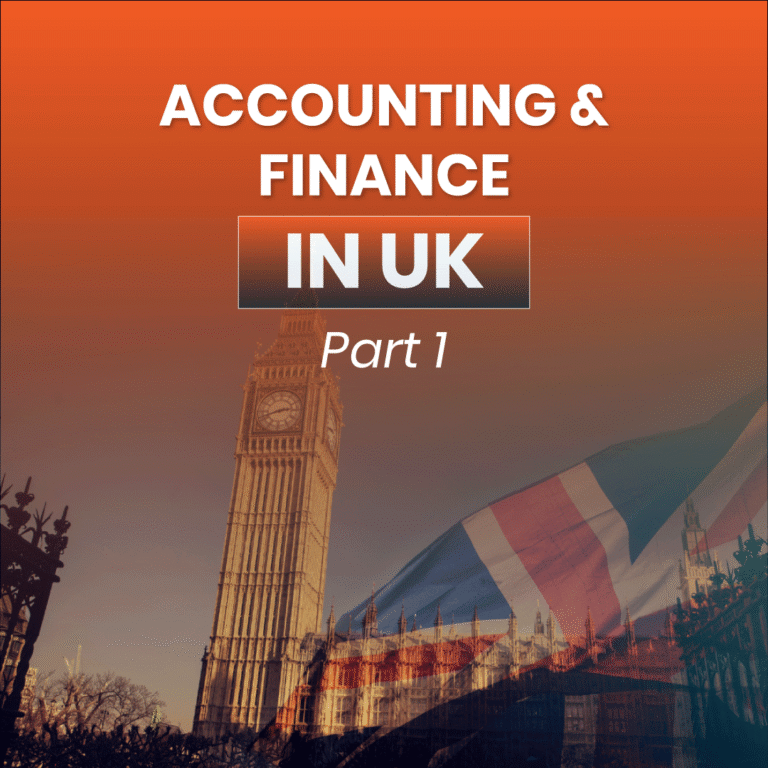
Accounting and finance have been considered a field for aspirants having a strong hold of math. Here is some good news: accounting and finance are not just crunching numbers. Accounting focuses on recording, analyzing, and reporting financial information, and finance looks at how money is managed, invested, and used to make decisions. If you study both, you will get a better practical understanding of how businesses measure performance, manage risk, and plan `ahead. Plus, you get to explore multiple career opportunities across accounting, banking, investment, consulting, and plenty of others.
Why Accounting and Finance Matter
Accounting and finance are closely connected, but they are not the same thing. Accounting helps you understand what happened to the money, while financial reporting includes management accounting, auditing, and taxation. A combined accounting and finance degree brings both worlds together. Depending on the university, you might study financial accounting, management accounting, corporate finance, economics, taxation, auditing, statistics, and business law.
How to Study Accounting and Finance
Here is the process to study both:
Create a solid understanding: Try to get the logic behind a formula, an accounting treatment, or a financial concept. Once you get the reasoning, the technical detail will fit in your mind.
Practice with examples: Read one through, close your notes, then try something similar on your own.
Practise regularly: Follow a simple practice routine, learn, practise, check, and spot the mistakes.
List Your Errors: Track calculations, misunderstood concepts, and any weaknesses that keep resurfacing. Reviewing this before an exam pays off more than people expect.
Use past papers: Keep practicing with past papers; do not save them for exam season. Start untimed, then gradually bring in timed practice.
Take the first step toward ACCA, enrol with expert guidance today
 Enrol in ACCA Today
Impact of AI Changing Accounting and Finance
AI is reshaping how students study and move their careers in these industries. According to ACCA’s 2026 research, 82% of finance professionals feel confident about developing AI-related skills. However, 51% are still worried about what AI means for their jobs.
The right approach to deal with AI in accounting and finance is to use it widely. AI can help in explaining difficult concepts and generating practice questions, but try the problem yourself first. Do not let AI do all the thinking; otherwise, you will finish the assignment without actually learning anything.
Career Opportunities in Accounting and Finance
Some top career choices in accounting and finance include:
- Accountant
- Auditor
- Tax adviser
- Management accountant
- Financial analyst
- Investment analyst
- Risk analyst
- Finance manager
- Business analyst
- Management consultant
Take the first step toward ACCA, enrol with expert guidance today
Take the first step toward ACCA, enrol with expert guidance today
Final Thoughts
Finally, accounting and finance are not just about learning numbers but understanding what those numbers are telling you and using that information to make better decisions. If you are still not sure which one to choose, compare courses carefully, get clear on the difference between accounting and finance, and think about the skills you’ll need for your career. Always focus on learning and understanding whatever course you choose. That’s the foundation for becoming more than a student who can pass an exam. If you want to see a thriving career in accounting and finance, ACCA can be a suitable career choice.
Frequently Asked Questions
Q: Accounting vs. Finance: What’s the Difference?
Ans: Accounting leans toward financial information, reporting, auditing and accuracy. Finance leans toward investment, valuation, risk, forecasting, and financial decisions.
Do you need to be good at math to pursue accounting or finance?
You need to be comfortable with numbers. You don’t need to be a math genius to pursue your career in accounting or finance.
Q: What are the career options in accounting and finance?
Ans: Accounting, audit, tax, banking, investment, financial analysis, risk, consulting, or a wider range of job roles.
Q: Can I use AI to study accounting and finance?
Ans: Yes. Use it for explanations, quizzes, and extra practice, but don’t let it replace your own reasoning.