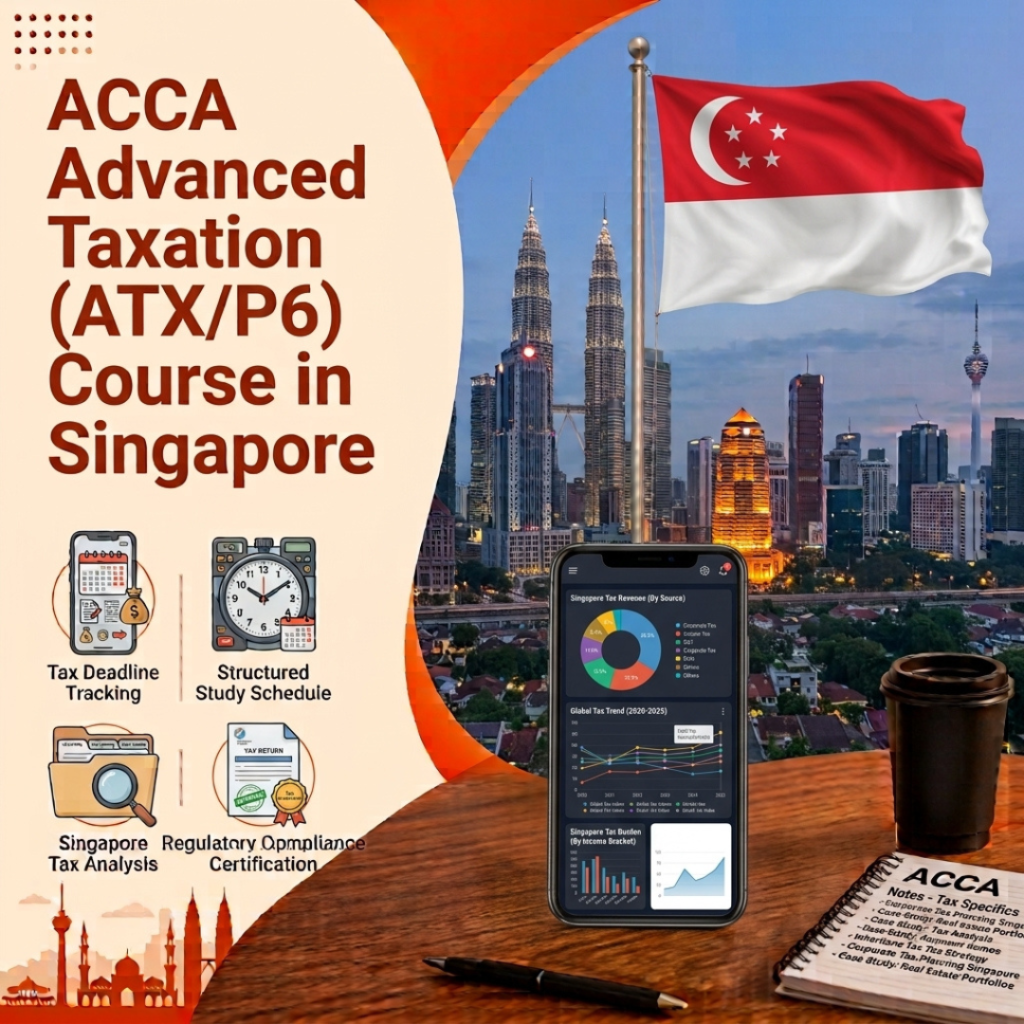
The ACCA Advanced Taxation paper holds a solid reputation for a comprehensive syllabus. While the content is not new, the paper hits differently.
So far, you have learned the topics around income tax, corporation tax, and VAT. While ATX does not ask you to relearn any of that. By pursuing the ACCA Advanced Taxation course, you get to implement that learning like a real adviser would, under real pressure, in a scenario that will not sit still and wait for one clean answer.
This guide breaks down what ACCA ATX tests, how the exam is structured, and what a realistic study plan looks like if you are preparing for ACCA in Singapore.
Take the first step toward ACCA, enrol with expert guidance today
 Enrol in ACCA Today
What does ACCA ATX include?
The ACCA Advanced Taxation includes what you learned earlier in the qualification and applies it the way a working professional would implement.
That matters more than it sounds. You could know every rate and allowance in the UK tax system cold and still struggle here, because ATX rewards judgement just as much as knowledge.
Every question sits inside a scenario, and the right answer hinges on how several taxes interact rather than a single clean calculation.
The ACCA ATX course suits candidates already working in tax globally. Without that everyday exposure to real client problems, ATX can feel like a steep climb, even for students who sailed through earlier papers. Put these together, and you get the kind of rounded tax judgement expected at a strategic adviser level.
ACCA Advanced Taxation Exam Structure
The ACCA Advanced Taxation exam splits into two sections:
Section A: Includes two case study questions, each worth 25 marks. The first includes 4 professional marks and 5 ethics marks.
Section B: Include two more questions, 20 marks each, spanning a mix of business and personal tax issues.
How to Qualify for the ACCA P6 Exam
- Revise the Taxation Paper: ATX assumes you have a solid hold on the Taxation (TX). Instead of just starting with new material, work on your foundation. Gaps will be visible later, which will result in low marks in exams.
- Give Time in Preparation: The ACCA ATX syllabus is complete and demanding. A 12-week study plan gives enough time to prepare.
- Avoid Chasing the Perfect Answer: ATX exams pull information from multiple areas of tax law at once, and no candidate feels equally confident across all of them. So trying to master every possible angle before you even attempt practice questions slows you down more than it helps.
- Treat practice questions: Read technical material to build recognition. The ATX rewards application, and to build the kind of judgement this paper demands, is through continuous practice on scenario questions.
The Bottom Line
The ACCA ATX is not about memorising tax rules. It is about learning to think like the adviser who applies them. Candidates who review their foundations, give themselves realistic preparation time, and practice consistently against exam-style scenarios tend to walk into the exam room with real confidence that becomes visible in the results. For more information, enroll at Mirchawala.
Guiding Your First Step Toward ACCA, With Free Expert Support
Frequently Asked Questions
How long is the ATX exam, and what’s the pass mark?
The ACCA ATX exam duration is three hours and fifteen minutes. Its pass mark is 50%, like the whole ACCA qualification.
Is the ACCA ATX paper tough?
Yes,, especially for people not from a tax background. Because the paper focuses on interpreting real client situations, candidates without day-to-day tax experience usually need extra time to build that practical instinct through structured practice.
How long does it take to prepare for the ACCA ATX exam?
Most candidates do best with a full 12-week study cycle. That’s enough time to revise the foundational knowledge, cover the syllabus properly, and practice extensively before sitting the exam.