INTRODUCTION:
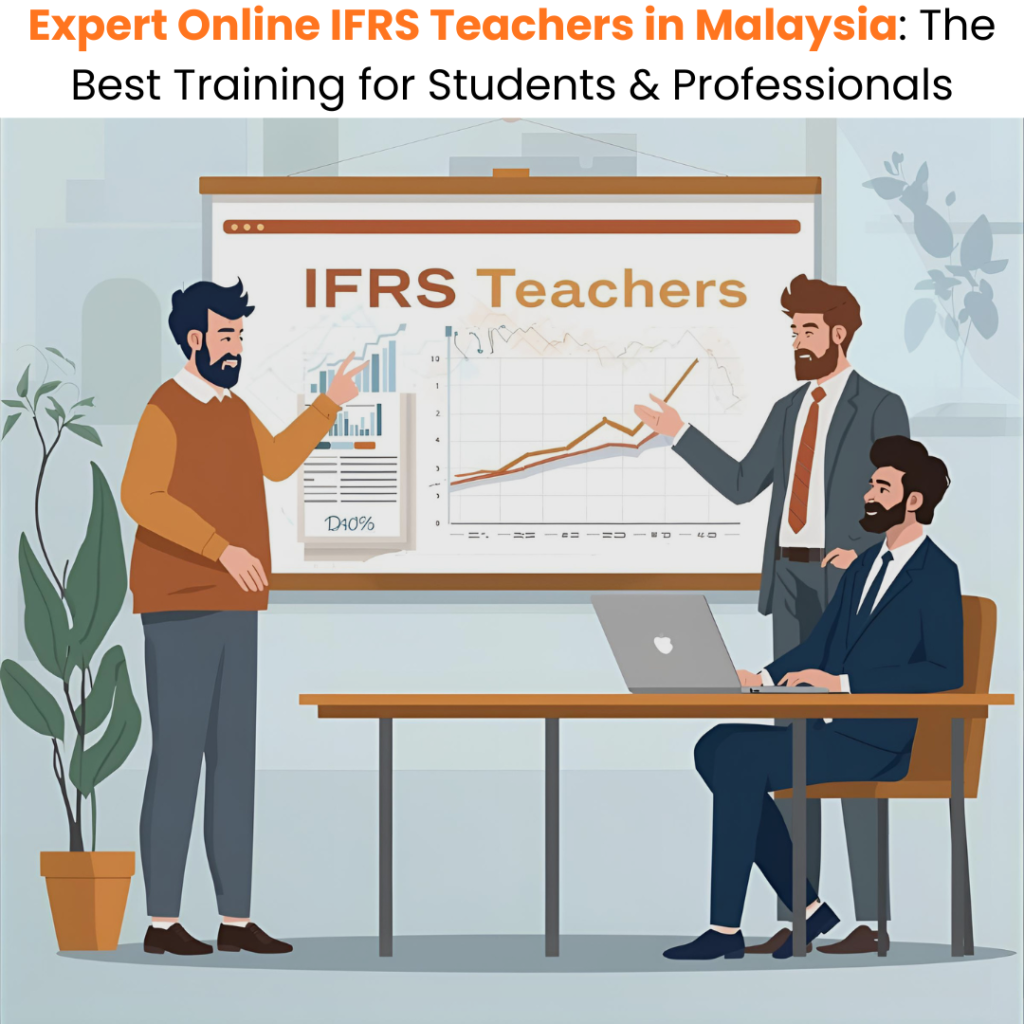
IFRS expertise is becoming a need for finance and accounting professionals all across the world, leading to professionals and students of this field to master in understanding and complying with these standards. Having this expertise on their professional profile enhances their worth in the industry, leading them to have progressive roles. Other than that, many qualifications like ACCA also emphasize students to master IFRS in Malaysia by learning with best IFRS Teachers to sustain in this advanced world.
The hype has impacted the Malaysian sectors as well; professionals and students are actively looking for the best IFRS teachers who could provide an effective yet flexible learning path. IFRS in Malaysia allows aspirants to go for an online learning path; therefore, the requirement of academic flexibility is met without compromising on the quality of the education. Despite several options of online IFRS teachers available in the region, students still find it difficult to choose one; hence, to ease the struggle, we have done the research and listed the top expert IFRS teachers in the town.
EXPERT IFRS TEACHERS IN MALAYSIA:
Here is a list of the best online tutors for IFRS in Malaysia that students can seek guidance from to achieve ultimate academic success and a progressive career.
1: MIRCHAWALA’S HUB OF ACCOUNTANCY:
A global tutoring institute offering various accounting and financial qualifications, including courses in IFRS in Malaysia; the institute serves in more than 80 countries around the world through its online learning platform. Mirchawala’s Hub of Accountancy is a platinum ACCA-approved provider; this prestigious approval tells a lot about their credibility and determination. They have been offering these services for over a decade now and have helped several students as well as professionals achieve their academic goals and progress in the financial world.
Mirchawala’s Hub of Accountancy has some of the best faculty members of the financial world who not only ensure a better understanding of IFRS standards but also train aspirants to comply with IFRS in Malaysia. The IFRS course is taught by Sir Mustafa Mirchawala, a dedicated faculty member who has enlightened thousands of students and helped them achieve their goals.
MUSTAFA MIRCHAWALA:
Sir Mustafa Mirchawala is amongst the best IFRS teachers; he is currently offering IFRS online courses in Malaysia. Students can benefit from this opportunity and learn from his years of experience in the practical world and interesting study techniques. He has been contributing to the financial world for a decade by shaping the careers of thousands of skilled finance aspirants. His efforts and capabilities can be witnessed through the success stories of his students who have not only achieved their academic goals but also thrived in their careers. If you want to have a flexible yet value-adding learning experience, joining Sir Mustafa Mirchawala for IFRS in Malaysia could be the right decision.
2: MALAYSIAN INSTITUTE OF ACCOUNTANTS:
Students willing to learn IFRS skills can join the Malaysian Institute of Accountants (MIA); they have been offering training to help aspirants in developing expertise in International Financial Reporting Standards. It is a regional institute and is quite popular amongst Malaysian students as well as finance professionals.
3: PwC MALAYSIA:
PwC Malaysia offers IFRS training and development programs in the region; their study route is quite flexible as they offer a self-paced online learning experience. They are a well-known institute in the finance and accounting industries internationally; always on the front foot to support finance aspirants as well as professionals to keep up with the modern, competitive financial world.

today!
4: THE KNOWLEDGE ACADEMY:
The Knowledge Academy is an international training provider offering distance learning and training for IFRS in Malaysia; their online platforms are user-friendly and can ensure students’ distant learning experience turns out to be quite fruitful for their future endeavors.
5: BMC TRAINING:
BMC training is a global training provider offering courses for IFRS in Malaysia; their training sessions are clear and credible. Malaysian students usually rely on them to train them with the expertise essential for the practical world.
HOW TO CHOOSE THE BEST IFRS TEACHERS IN MALAYSIA?
Indeed, the number of IFRS tutors and trainers has increased over the years; therefore, students have several options, but choosing the right teacher matters a lot. Hence, here are certain tips that you must follow to choose the best IFRS teachers in Malaysia:
- Check if they are credible and well-recognized before enrolling.
- Student feedback is essential; see what previous students have to tell about their experience.
- If possible, students are advised to take demo classes to understand their teaching method and decide if it would work for them.
- Before going towards the registration process, students should first decide on the learning method they are looking forward to adopting (online or onsite).
CONCLUSION:
Having a great and experienced teacher is very important to ensure your learning experience is fruitful; IFRS in Malaysia is a valued skill, hence, an academic guide should be capable of training you well for the financial world. Selecting one from several IFRS teachers can make students indecisive; hence, we enlisted the expert IFRS teachers that you can consider to elevate your journey. Do your proper research before enrolling in any of them and make sure their study route is in the best alignment with yours.
FREQUENTLY ASKED QUESTIONS:
Q1: Do ACCA professionals need to learn IFRS skills?
Answer: Yes, to have a progressive career and better opportunities, ACCA professionals must have IFRS expertise; this skill is a necessity to survive in the modern financial world. The ACCA qualification also emphasizes that students become experts in IFRS in Malaysia through CPD programmes and updating the academic curriculum.
Q2: Why are companies actively adopting IFRS standards in Malaysia?
Answer: There are several reasons behind it, such as business expansion, stakeholder demands, sustainability measures, foreign investments, easy compatibility, and transparency of the financial statements, etc.