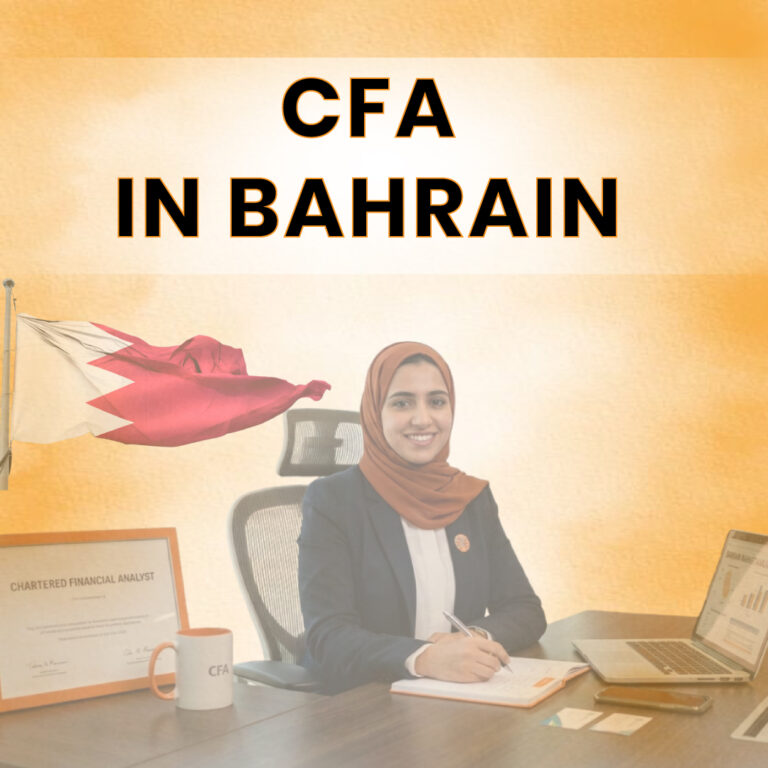
CFA in Bahrain is considered a pass to a fulfilling career in the fast-paced world of finance. It provides professionals with the abilities and knowledge to succeed in a variety of financial professions and is commonly regarded as the gold standard in investment management. If you are planning to pursue CFA certification in this highly competitive era, you must understand the syllabus and career scope to stand out in the competitive financial job market. This blog post will be a reliable one-stop resource for launching a thriving financial career as a CFA-qualified professional.
CFA Qualification in Bahrain: Syllabus Outlook
The CFA Course syllabus is not just about showing a layered evolution to reflect the real-life development of financial professionals. The curriculum works as a financial maturity map, starting with the principles of ethics and mathematical methods, developing analytical depth through corporate finance and financial reporting, and ending with wealth planning and portfolio management.
CFA Level I Syllabus
CFA Level I establishes core principles for investment work, covering most topics. The focus is on mastering foundational tools and understanding basic concepts essential for the financial industry.
CFA Level I Topics |
Exam Focus |
| Ethical & Professional Standards | Ethical decision-making, professional conduct, GIPS basics |
| Quantitative Methods | Time value of money, probability, hypothesis testing |
| Economics | Micro & macro fundamentals, currency exchange, economic cycles |
| Financial Statement Analysis | Financial reporting, ratios, income statements, balance sheets |
| Corporate Issuers | Capital budgeting, cost of capital, corporate governance |
| Equity Investments | Market organisation, equity valuation basics |
| Fixed Income | Bond pricing, yield measures, duration and convexity |
| Derivatives | Forwards, futures, options fundamentals |
| Alternative Investments | Real estate, private equity, commodities |
| Portfolio Management & Wealth Planning | Risk–return concepts, diversification, CAPM |
CFA Level II
CFA Level II builds on the fundamentals from Level I with a focus on practical application and interpretation. This level assesses candidates’ ability to analyze and interpret complex scenarios.
| CFA Level II Topics | Exam Focus |
| Ethical and Professional Standards | Application of ethics in complex, real-world scenarios |
| Quantitative Methods | Time-series analysis, regression, and valuation tools |
| Economics | Currency exchange, economic growth, and capital flows |
| Financial Statement Analysis | Advanced accounting analysis and adjustments |
| Corporate Issuers | Corporate governance, capital structure, and financing |
| Equity Investments | Equity valuation models and market analysis |
| Fixed Income | Yield curves, credit analysis, and bond valuation |
| Derivatives | Pricing and use of forwards, futures, options, and swaps |
| Alternative Investments | Real estate, private equity, and hedge fund analysis |
| Portfolio Management & Wealth Planning | Portfolio risk, return attribution, and asset allocation |
CFA Level III Syllabus
The final level includes an advanced version with all the significant topics.
CFA Level III Topics |
Exam Focus |
| Ethical and Professional Standards | Ethics in portfolio & client management |
| Economics | Capital market expectations |
| Equity Investments | Portfolio equity strategies |
| Fixed Income | Liability-driven & income strategies |
| Derivatives | Risk management applications |
| Alternative Investments | Portfolio diversification role |
| Portfolio Management and Wealth Planning | Asset allocation, IPS, wealth planning |
Top CFA Jobs and Careers in Bahrain
Here is the list of popular job roles you can go for after pursuing CFA in Bahrain:
- Portfolio Manager: As a portfolio manager, you will be responsible for managing and investing the client’s funds (individuals or entities) in a way that generates a required rate of return while considering the client’s risk appetite.
- Equity Research Analyst: In this role, you study industry-specific equity companies and project their future values to assess whether they are worth investing in.
- Mergers and Acquisition Analyst: As the name implies, as an M&A analyst, you mainly work and are involved in mergers and acquisitions-related work.
- Credit Analyst: A credit analyst analyzes the creditworthiness of an individual or an organization.
Bottom Line
Overall, your career will advance, and your credibility will grow with a CFA certification in Bahrain. Additionally, CFA can help you find employment anywhere in the world. You will have more opportunities and higher-paying jobs because of this international reputation. But as a CFA candidate, you need more than learning to excel in your CFA exam.
Explore the top CFA career paths, establish CFA job salary measures, and leverage your CFA qualification to add credibility in your career. Be proactive about the latest technologies and innovations in the finance landscape. Once you become active and utilise CFA credentials with the available resources, you are all set to move from CFA candidate to a thriving financial professional. Think of enrolling at Mirchawala during your journey for professional guidance and support.
Frequently Asked Questions (FAQs)
Q: Is it worth doing CFA in Bahrain?
Ans: The CFA holds a great reputation and career potential in Bahrain. Any finance specialist who passes every exam level in 2026 can expect to earn a much higher salary. Although the beginning wage for a CFA may appear low at first, the trajectory is steep.
Q: Are CFAs in demand in Bahrain?
Ans: Yes, CFA specialists are hired in top banks, Big 4 enterprises, and investment firms for positions in corporate finance, risk management, and portfolio analysis.
Q: What is the CFA exam pass rate?
Ans: As of February 2026, the most recent CFA pass rates are 45% for Level 1, 42% for Level 2 (November 2025), and 50% for Level 3.
Q: What are the best CFA jobs in Bahrain?
A CFA can advance into research, asset management, risk, consultancy, and banking. Most people begin with analyst work and then move to portfolio or advisory roles as they gain expertise. The top positions after CFA in Bahrain include investment banking, portfolio management, credit analysis, and equities research.