
Are you thinking of pursuing the IFRS diploma but are confused about it? There are some myths and disbeliefs after the IFRS qualification that could be creating a doubt for you to move further or giving you the wrong impression. But don’t worry—we’re here to help you with the facts! We will debunk the top three IFRS myths and discuss the reality behind them.
Debunking these myths not only helps you get the right information, but it also gives you the ability to make wise decisions for your future. Today, IFRS is more than simply a credential; it’s a doorway to countless opportunities in the financial sector.
Going through this blog will equip you with the knowledge and skills necessary to make a thriving career with IFRS and open a path to achievement, acknowledgment, and personal fulfillment. So stay tuned and keep scrolling!
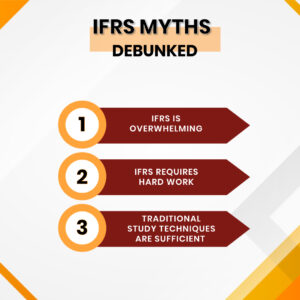
Myth 1: IFRS is overwhelming and tedious
Many people believe that IFRS is boring and tough. Students feel confused and unsure of where to begin when they first approach IFRS content. Confusion may result from navigating through complex regulations and contradicting information without a systematic learning method. However, the issue is frequently not with IFRS per se, but rather with how it is implemented.
The right approach to studying IFRS begins with a structured learning technique. One can make learning easy by segmenting the content into smaller, more accessible chunks. An organized structure, step-by-step instructions, and concise explanations make the material more interesting and understandable. Mirchawala offers a complete IFRS course with an easy-to-understand approach and simple study materials.
Myth 2: IFRS Success Requires Hard Work
Many people believe that learning IFRS takes a lot of hard work, including many hours, reading a lot of books, and enrolling in several classes.
Since many people realize they are not making significant progress despite their best efforts, this IFRS myth often results in burnout and dissatisfaction. Without a defined focus, the never-ending cycle of study can leave students feeling worn out and still ill-prepared for IFRS problems in the real world.
The right way is to focus on targeted learning rather than just the quantity of effort. Instead of just accruing study hours, taking an IFRS online course at an institute like Mirchawala enables students to recognize fundamental ideas and apply them in real-world situations. A greater comprehension of IFRS is ensured by putting quality over quantity.
Myth 3: Traditional Study Techniques (Paper, Pen, and Books) Are Sufficient
A lot of people rely on traditional study techniques, including reading books, editing notes, and writing exercises. These techniques might be useful for studying for exams, but they frequently fail to translate into real-world scenarios. It might be difficult for accountants and other finance professionals to apply their theoretical understanding to real-world IFRS-related issues.
Using interactive learning techniques and contemporary tools is essential to understanding IFRS. Using Excel and interacting with real-world situations can make the lessons more applicable and relevant. Enrolling in Mirchawala’s IFRS training course provides interactive case studies, study tools, and visual aids. This method assists students in developing the abilities needed to successfully manage real-world circumstances.
Bottom Line
The goal of dispelling these IFRS myths is to give people clarity and accurate information. IFRS offers a wealth of opportunities for aspiring professionals who are passionate about accounting and finance, regardless of their background or experience. If you are all set for the IFRS course, contact us. We will be happy to help you!
Frequently Asked Questions (FAQs)
Q: What are the problems with IFRS?
Ans: IFRS encourages judgment and fair value-based accounting, i.e., subjectivity. Different companies or auditors may treat the same transaction differently, undermining comparability.
Q: How difficult is a Diploma in IFRS?
Ans: In summary, it will take about four to five months to adequately prepare for the Diploma IFRS examination. The Diploma in IFRS is a widely recognized qualification, so it shouldn’t be taken lightly or cause anxiety.
Q: Which institute is best for the Diploma in IFRS?
Ans: Mirchawala is a reputed and the best IFRS institute to pursue the diploma course and give your career new wings.