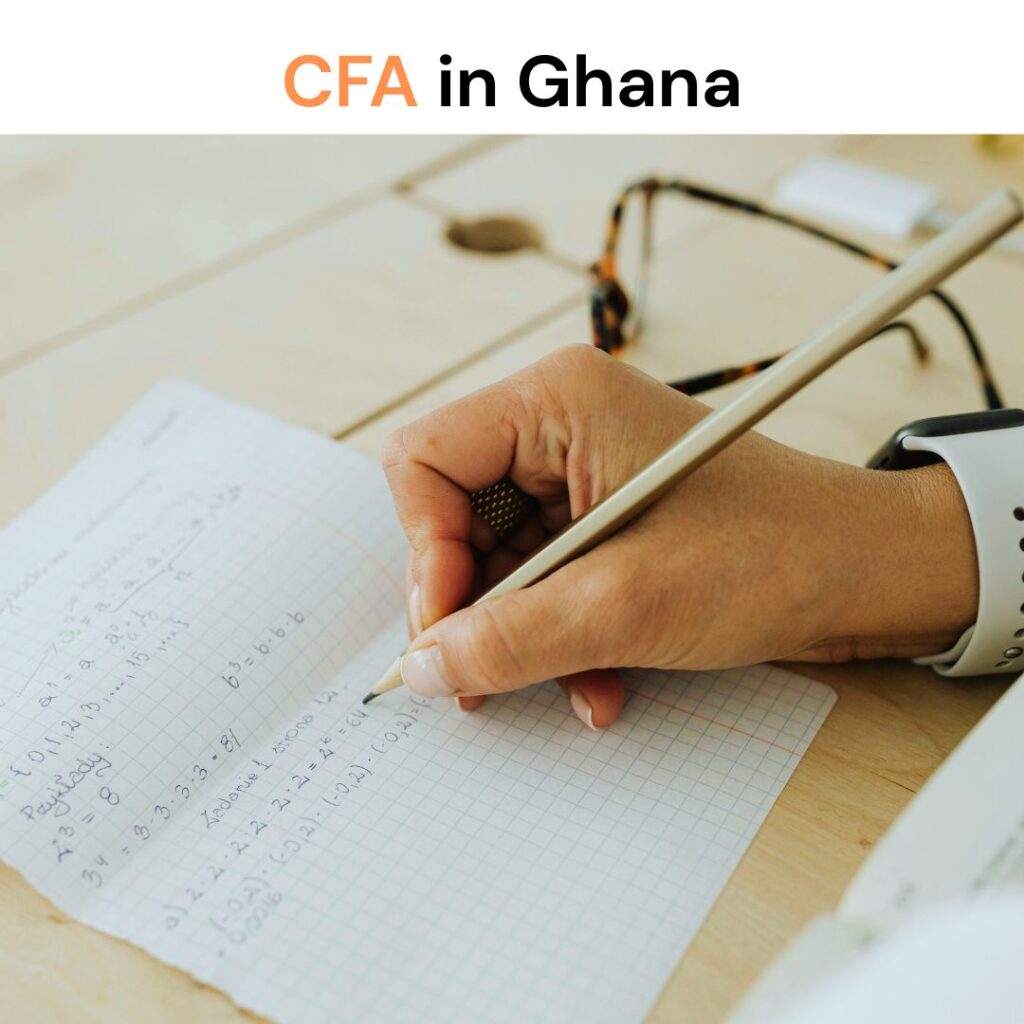
If you are working in finance or planning to build a serious career in this field, you have probably come across the CFA designation. The Chartered Financial Analyst qualification is globally respected and often seen as a benchmark for investment and finance professionals. In recent years, interest in CFA in Ghana has grown steadily, and for good reason.
Ghana’s financial sector is becoming more complex. Banks are expanding their services, investment firms are becoming more active, pension funds are growing, and fintech is reshaping how money moves. Employers are now looking for professionals who not only understand accounting basics but can also analyze investments, manage risk, and make sound financial decisions. This is where the CFA qualification fits naturally into the picture and why a CFA career in Ghana is increasingly attractive.
Why Choose CFA in Ghana
Ghana’s economy has been gradually diversifying, leading to stronger demand for skilled finance and investment professionals. Banks need analysts who understand credit risk and financial modeling. Asset management firms need people who can evaluate portfolios and market trends. Pension funds and insurance companies require professionals who can manage long-term investments responsibly.
Pursuing CFA in Ghana allows you to position yourself for these roles without leaving the country. At the same time, CFA is internationally recognized, which means you are not limiting yourself to the local market. Many professionals see CFA as a bridge that supports career growth in Ghana while keeping doors open across Africa, the Middle East, Europe, and beyond.
Another reason CFA stands out is its strong focus on ethics. In a market where trust and transparency matter more than ever, employers value professionals who are trained to operate with integrity. This ethical grounding strengthens your professional reputation and supports long-term career stability.
Understanding the CFA Program
The CFA Program is divided into three levels, each building on the previous one. Understanding this structure helps you decide whether the journey fits your goals and lifestyle.
Level I focuses on foundational knowledge. You learn about financial reporting, economics, quantitative methods, corporate finance, and basic investment tools. This level is ideal for students and early-career professionals who want to build strong fundamentals.
Level II goes deeper into asset valuation. You work on more complex financial analysis, equity and fixed-income valuation, and real-world investment scenarios. This level is often considered the most challenging, especially for those balancing work and study.
Level III focuses on portfolio management and wealth planning. It brings everything together and emphasizes decision-making from a client and portfolio perspective.
Across all three levels, the program builds skills in financial analysis, investment decision making, ethics, valuation, and portfolio management. These skills are directly relevant to creating a sustainable CFA career in Ghana.
CFA Course and Training Options in Ghana
There are several ways to prepare for the CFA exams, and choosing the right approach depends on your schedule, learning style, and budget.
Many candidates choose self-study, using official CFA Institute materials. This option offers flexibility and lower costs, but it requires strong discipline and time management.
Others prefer structured CFA training in Ghana, which often includes classroom sessions or live online classes, mock exams, revision support, and access to tutors or mentors. A formal CFA course in Ghana can be especially helpful if you are returning to studies after a long break or juggling a demanding job.
Approved tuition providers play an important role here. They help break down complex topics, keep you accountable, and provide exam-focused guidance. For working professionals, this structure can make the CFA journey more manageable.
CFA Tuition in Ghana: Cost and Study Commitment
Cost is a major concern for most candidates, and it is important to understand what you are committing to. CFA tuition in Ghana typically includes teaching fees, study notes, practice questions, and mock exams. Exam registration fees and official curriculum costs are paid separately to the CFA Institute.
While the overall investment is not small, many candidates see it as a long-term career investment rather than an expense. Each level usually requires about 300 hours of study, so plan your time carefully.
For working professionals, balancing full-time work with CFA studies is challenging but realistic. Many candidates spread their studies over evenings and weekends and plan their exam attempts strategically. Consistency matters more than speed in this journey.
CFA Certification in Ghana and Its Career Impact
Earning a CFA certification in Ghana sends a strong signal to employers. It shows technical competence, commitment to professional development, and adherence to high ethical standards. In competitive hiring environments, this combination sets candidates apart.
CFA charterholders are often entrusted with greater responsibility, whether managing portfolios, advising clients, or contributing to strategic decisions. CFA membership also connects you to a global professional network, which can be valuable for learning, mentorship, and career mobility.
Over time, this credibility supports career progression into senior and leadership roles within finance and investment organizations.
CFA Career Opportunities in Ghana
There is a wide range of CFA career opportunities in Ghana across different sectors. In banking, CFA professionals work as credit analysts, treasury specialists, and risk managers. In investment firms and asset management companies, roles include financial analyst, portfolio manager, and research analyst.
Insurance companies and pension funds value CFA professionals for their ability to manage long-term investments responsibly. Fintech firms are also hiring CFA candidates for roles that combine financial analysis with technology-driven solutions.
Advisory roles are another strong option. Investment advisors and wealth managers with CFA training are well-positioned to serve high-net-worth clients and institutional investors. Multinational firms operating in Ghana often prefer CFA-qualified professionals because the qualification aligns with global standards.
Is CFA the Right Choice for You
CFA is best suited for individuals who are serious about a long-term career in finance and investment. If your goals include investment analysis, portfolio management, or advisory roles, CFA offers clear value.
Compared to other finance and accounting qualifications, CFA is more specialized. While ACCA focuses strongly on accounting and audit, CFA emphasizes investments, markets, and portfolio management. Many professionals even combine both to broaden their career options.
From an investment perspective, CFA can be highly rewarding in the Ghanaian market, especially as financial services continue to grow. However, it requires patience, discipline, and commitment. It is not a quick win, but for the right candidate, it is a powerful career move.
Conclusion
Pursuing the CFA in Ghana is a strategic decision for those seeking to build a respected, future-ready career in finance and investment. The qualification aligns well with Ghana’s evolving financial landscape while offering international recognition and mobility.
Before starting, take time to assess your career goals, financial situation, and ability to commit to the study demands. When approached with a clear plan and realistic expectations, a CFA career in Ghana can open doors to meaningful, well-compensated, and intellectually rewarding opportunities.
FAQs
1. Is CFA in Ghana worth it for working professionals
Yes, CFA in Ghana is worth it for working professionals who want to move into investment-focused roles or senior finance positions. While the study commitment is demanding, the long-term career benefits, credibility, and access to higher-level roles often outweigh the challenges.
2. How long does it take to complete the CFA certification in Ghana
Most candidates complete the CFA certification in Ghana within three to four years. The timeline depends on how many levels you pass on the first attempt and how well you balance work, study, and personal commitments. Consistent preparation plays a key role.